Last updated November 19, 2026
Leaving treatment with nowhere safe to go? Sober living in Ohio is a safe home with no alcohol and no drugs, where people in recovery live together, keep the house rules, and back each other up while they rebuild.
We're Tina Marie's Recovery Home in Dayton. This page tells you how sober living works in Ohio, what it costs, who pays for what, and how to tell a good home from a bad one before you sign anything. We wrote it the way we'd say it on the phone. If you'd rather just talk, call (326) 212-0542.
Sober living in Ohio at a glance
- What it is: a home with no alcohol or drugs, peer support, and help getting treatment. Ohio law calls it a "recovery housing residence."
- Cost: no single price. Some beds are free because a county tax levy or a grant pays for them. In the Dayton area, private pay usually runs about $125 to $250 a week.
- Medicaid: pays for treatment, like counseling, intensive outpatient (IOP), and medication-assisted treatment (MAT). It does not pay rent.
- Check first: look the home up on the state's free registry at rhsearch.mha.ohio.gov, and ask to see its Ohio Recovery Housing certificate.
- Tina Marie's: seven residences certified by Ohio Recovery Housing, for men, women, and couples, open to residents from anywhere in Ohio. Vouchers, sliding-scale support, and grants bring most residents to $0–$50 per week for the housing itself. Call (326) 212-0542.
What is a sober living home in Ohio?
It's a real home, not a hospital or a treatment center. You live with other people in recovery, keep the house rules, and get your treatment from a provider outside the house. People often move into sober living after inpatient or residential treatment, or while they go to outpatient care. "Sober living," "sober house," and "recovery housing" all mean the same kind of home.
Ohio law has its own name for it: a recovery housing residence. The law defines it as "a residence for individuals recovering from alcohol use disorder or drug addiction that provides an alcohol-free and drug-free living environment, peer support, assistance with obtaining alcohol and drug addiction services, and other recovery assistance for alcohol use disorder and drug addiction" (Ohio Revised Code 5119.01).
Sober living vs. halfway houses, Oxford Houses, and treatment
- Halfway house. In Ohio law, a halfway house usually means a facility licensed by the Ohio Department of Rehabilitation and Correction's Division of Parole and Community Services, where people on parole or post-release control, or under a court-ordered sanction, may be placed (Ohio law). Sober living is different: it's a recovery home, not a corrections facility licensed by the prison system. People often say "halfway house" when they mean sober living, but under Ohio law they are two different things. More on our halfway house page.
- Oxford House. Oxford Houses are recovery homes the residents run themselves, democratically and without professional staff. Ohio law names Oxford House, Inc. as one of the organizations whose accreditation (or its equivalent) the state can accept (Ohio law).
- Treatment. A treatment program gives you clinical care: counseling, groups, medication. A sober living home gives you a safe place to live. Many people do both at the same time.
The levels on Ohio's registry
The state registry shows each home's level: Peer-Run (Level 1), Managed (Level 2), Supervised (Level 3), or Clinical (Level 4). The level tells you how much structure and oversight a home has, from houses the residents run themselves to homes with more staff and structure. No level is automatically better. Pick the one that fits where you are in recovery. All seven of our registry listings are Managed.
How much does sober living cost in Ohio?
There's no single statewide price. Some beds are free because a county tax levy or a grant pays for them. In the Dayton area, private-pay sober living usually runs about $125 to $250 a week. Be careful with any website that quotes one "average Ohio price." Nobody publishes a reliable statewide number.
At Tina Marie's, vouchers, sliding-scale support, and grants bring most residents to $0–$50 per week for the housing itself, and we work with people who arrive with little or no income. Whatever home you pick, make sure it's upfront. A good home tells you, in writing: the weekly cost, what's included, and what happens if you can't pay one week. See our cost page, or our guide to how much sober living costs across Ohio.
Worried about money? Call (326) 212-0542 and ask. It's free and confidential.
Does Medicaid pay for sober living in Ohio?
Not for the housing. Ohio Medicaid's behavioral health services don't include room and board (Ohio Medicaid rule). Medicaid does pay for the treatment you get while you live in sober living: counseling, intensive outpatient (IOP), medication-assisted treatment (MAT), and case management.
Ohio Medicaid is statewide, so if you move to a home in another county, your coverage comes with you. Just report your new address at benefits.ohio.gov or to your county Job and Family Services office. Don't have Medicaid yet? You can apply at the same site. For more, read does Medicaid pay for sober living in Ohio? and our Medicaid page.
Sober living at Tina Marie's Recovery Home
Tina Marie's Recovery Home is Kevin "Coach Sat" Saterfield's tribute to his mother, Tina Marie. She fought addiction for much of her life, and in her final years, she got sober. Kevin spent years coaching Dayton-area football, including a 2017 state championship with Trotwood High School, and he runs these homes the way he coached: structure, accountability, and never giving up on someone who's fighting for their life back. In his words: "My mother's fight taught me that addiction doesn't define a person. Recovery is possible when you have the right environment, the right support, and someone who refuses to give up on you."
Hold us to the same checklist we give you below. Tina Marie's has seven residences certified by Ohio Recovery Housing, from October 28, 2026 through October 27, 2028. All seven are listed on Ohio's recovery housing registry as Managed homes, and as of November 19, 2026, the registry lists no substantiated complaints against any of them. Our homes are in the Dayton area and Miamisburg, and we welcome residents from anywhere in Ohio. See all of our homes and how our program works.
- Men: a single room in some houses; in others, no more than two men to a room. See men's sober living in Ohio.
- Women: every woman has her own private room, and our women's home accepts pregnant women. See women's sober living in Ohio.
- Couples: housing for partners who are both committed to recovery, where space allows. See couples sober living.
- Every room has its own TV with Netflix and YouTube TV, and residents have access to a house computer for job applications, email, and paperwork.
- A 7–14 day observation period when you first arrive.
- Your choice of treatment provider: our recommended provider or your own. Your housing never depends on which provider you choose.
- Medication: all seven of our residences are listed as "MAT supported" (MAT means medication-assisted treatment) on the state registry.
- Privacy: we keep resident information private and share it only with your written consent or where the law requires it.
Veterans in recovery can also see our veterans sober living page.
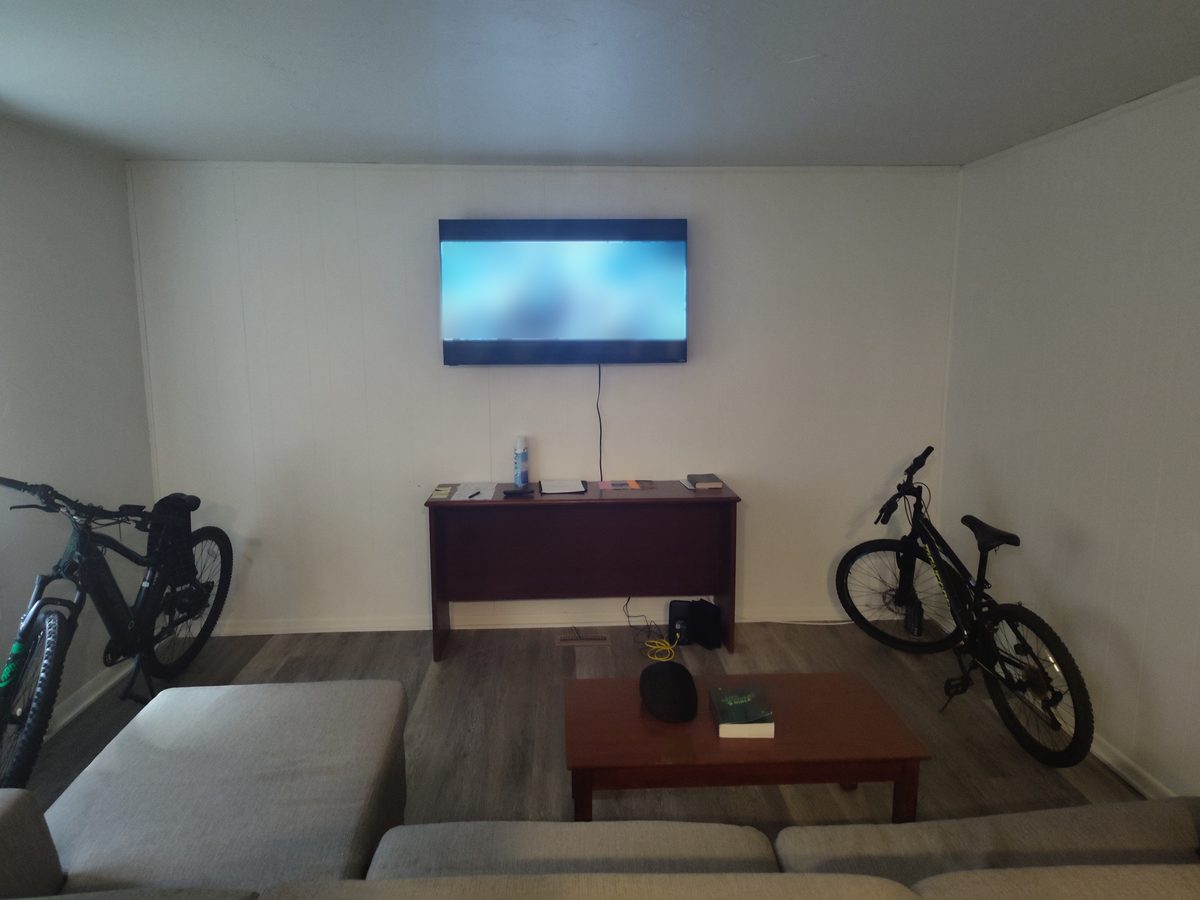
Moving to Dayton from another part of Ohio
You don't have to do recovery in the same town where the addiction happened. For a lot of people, putting distance between themselves and the old crowd and the old triggers is one of the strongest moves they can make. We welcome residents from across the state. Start here if you're coming from:
- Sober living for Cincinnati residents
- Sober living for Columbus residents
- Sober living for Cleveland residents
- Sober living for Akron residents
- Sober living for Toledo residents
Our guide to sober living away from home walks through the first call, getting here, and settling in.
Ready to talk? Call (326) 212-0542.
How to check an Ohio sober living home before you move in
You're trusting a home with your recovery, so check it the way you'd check anything that important. Here's the list we'd use ourselves:
- Look it up on the state registry. Ohio keeps a free public registry of recovery homes at rhsearch.mha.ohio.gov, run by the Ohio Department of Behavioral Health (formerly OhioMHAS). It shows each home's level and, as Ohio law requires, any substantiated complaints.
- Ask whether it's certified by Ohio Recovery Housing, and ask to see the certificate. Ohio Recovery Housing (ORH) sets quality standards for recovery homes in Ohio and reviews homes against them. Ask us too: our ORH certification runs through October 2028.
- Get the rules and the cost in writing. A good home gives you its house rules, resident agreement, and weekly cost before you move in.
- Ask about medication. If you take buprenorphine (Suboxone), methadone, or naltrexone (Vivitrol), ask how the home handles it. Never stop a prescribed medication on your own; talk to your prescriber first.
- Ask whether you can keep your own treatment provider. A home can expect you to stay engaged in your recovery, but your bed shouldn't depend on using one particular provider.
- Ask what happens after a relapse. Every home should have a clear, written answer.
- Visit or video-call. Look at the bedrooms, the kitchen, and how the house is kept. Ask to talk with the house manager.
Walk away if a home won't put anything in writing, won't show you its registry listing or certificate, or tells you that you have to use its treatment provider to keep your bed.
Something wrong at a recovery home? Ohio's Department of Behavioral Health accepts complaints about recovery homes (Ohio law).
How to find a sober living home in Ohio
- The state registry at rhsearch.mha.ohio.gov. Search by county, city, or ZIP code. Each listing shows who the home serves (for example men, women, or women with children), its level, and labels such as "MAT supported" (medication-assisted treatment) or "significant others allowed."
- Your county board. Every Ohio county is served by a local board for addiction and mental health services, often called an ADAMHS board or a mental health and recovery board. Many help residents connect with housing and treatment.
- Ohio 211. Dial 211 for local help, including housing resources.
- Treatment to go with it. FindTreatment.gov helps you find licensed treatment programs near the home you choose.
Once you have a short list, run each home through the checklist above. If you're anywhere in Ohio and open to the Dayton area, we'd be glad to be on that list. Call (326) 212-0542.
Does sober living actually work?
There's no official statewide success rate, so be wary of any home that promises you one. But the research is encouraging:
- A study that followed 245 people for 18 months after they moved into sober living houses found improvements in alcohol and drug use, employment, psychiatric symptoms, and arrests. How much drinking and drug use there was among the people in a person's life predicted nearly every outcome, and people more involved in 12-step groups had fewer arrests and less alcohol and drug use (Polcin and colleagues, 2010).
- In an Illinois study, 150 people leaving addiction treatment were assigned by chance to an Oxford House or to usual care. Two years later, the Oxford House group had significantly lower substance use, higher monthly income, and lower incarceration rates (Jason and colleagues, 2006).
Both studies point to the same lesson: the people around you matter. That's the whole idea behind sober living.
How to get started
Call (326) 212-0542 for a free, confidential conversation. We'll talk through where you are, confirm the fit, and plan your move-in. Want to know what day one feels like? Read what to expect on your first day.
Sources
Checked November 19, 2026.
- Ohio Revised Code 5119.01: definition of "recovery housing residence."
- ORC 5119.39: accreditation the state can accept, including Ohio Recovery Housing (the Ohio affiliate of the National Alliance for Recovery Residences) and Oxford House, Inc.
- ORC 5119.393: complaints about recovery housing.
- ORC 5119.394: the state recovery housing registry.
- ORC 2967.14: halfway houses and community residential centers.
- Ohio Administrative Code 5160-27-02: Ohio Medicaid behavioral health services do not include room and board.
- Ohio recovery housing registry (Ohio Department of Behavioral Health).
- Ohio Recovery Housing.
- Polcin DL, Korcha RA, Bond J, Galloway G. Sober living houses for alcohol and drug dependence: 18-month outcomes. Journal of Substance Abuse Treatment, 2010. PubMed 20299175.
- Jason LA, Olson BD, Ferrari JR, Lo Sasso AT. Communal housing settings enhance substance abuse recovery. American Journal of Public Health, 2006. PubMed 17008561.